
The short answer. Marine wire is copper with a thin coat of tin on every strand, cut into many fine strands, with insulation rated 105°C dry. The tin slows corrosion. The fine strands handle vibration. Regular auto wire is usually bare copper, and on a boat that corrosion creeps up inside the jacket. Pick the size from the amps and the round-trip length, not from what’s in the drawer.
You’ll need
- Tinned, finely stranded boat cable: Pacer duplex boat cable 14/2 red/black, 100 ft or Pacer duplex boat cable 18/2 red/black, 250 ft for small DC circuits
- The amps each circuit draws (from the device manual) and a tape measure
- The Wire gauge calculator to pick the size, then the Fuse size calculator to protect it
- Sealed, tinned terminals: Pacer heat-shrink ring terminal 8 AWG, 3/8 in stud and Pacer heat-shrink butt connector 12-10 AWG
- A ratcheting crimper and a heat gun (the how-to is in Heat-shrink terminals and crimping battery cable)
You don’t need a trade ticket to wire a boat well. You need the right wire, the right size and tidy ends. Here’s how to pick all three.
What is tinned marine wire?
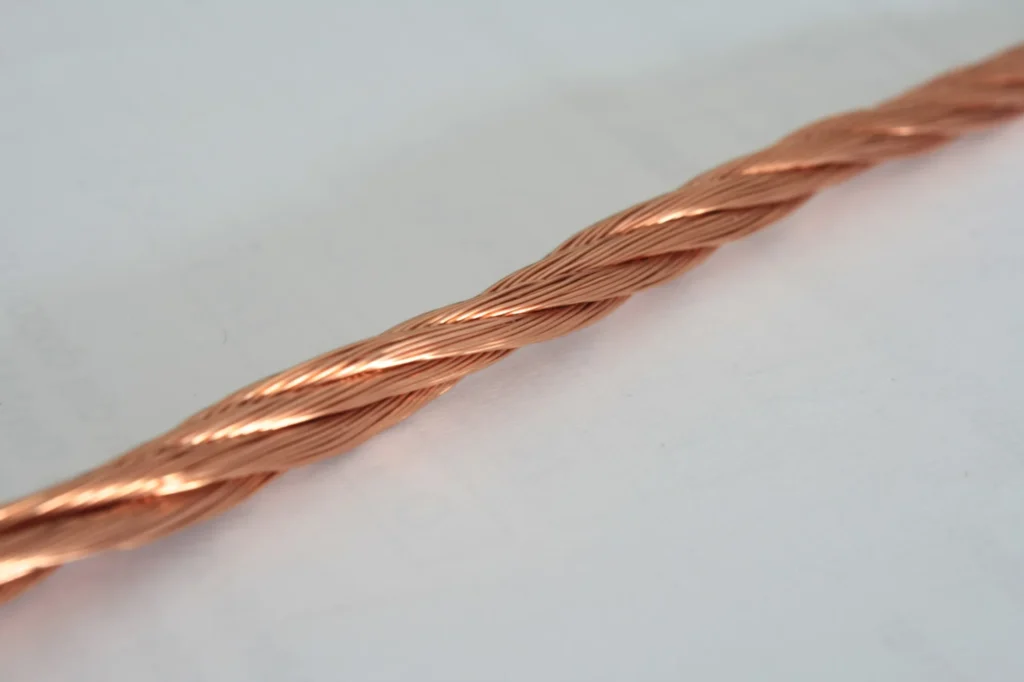
Take a copper wire, coat every strand with tin, then twist a lot of very fine strands together. That’s it.
Pacer’s boat cable is annealed, finely stranded tinned copper to ASTM B172 Class K. The insulation is flexible PVC rated from -20°C to 105°C. It carries a 600V rating and the listings boat wire is held to: UL 1426 BC-5W2, ABYC E-11.15 and the Coast Guard rules in 33 CFR part 183.
Ancor describes its marine wire the same way. Tinned copper strands protect against corrosion and electrolysis. Its Type 3 stranding resists fatigue from vibration and flexing. Rated 600V, 105°C dry and 75°C wet.
Tinned marine wire vs regular wire: what’s the difference?
Three things: the tin, the strands and the insulation.
| Tinned marine boat cable | Regular auto (SAE) wire | |
|---|---|---|
| Copper | Tinned on every strand | Bare copper |
| Strands | Fine (ASTM B172 Class K) | Stranded, no class listed |
| Insulation rating (Pacer) | 105°C dry, 75°C wet, 60°C oil, 600V | 105°C dry, 60V DC |
| Listing | UL 1426 BC-5W2, ABYC E-11.15 | SAE automotive |
The rating column comes from Pacer’s own catalog, which sells both kinds. Pacer lists its plain SAE primary wire as soft annealed stranded bare copper, and it even calls its tinned SAE wire a cost-effective alternative to bare copper auto wire.
Why the tin matters
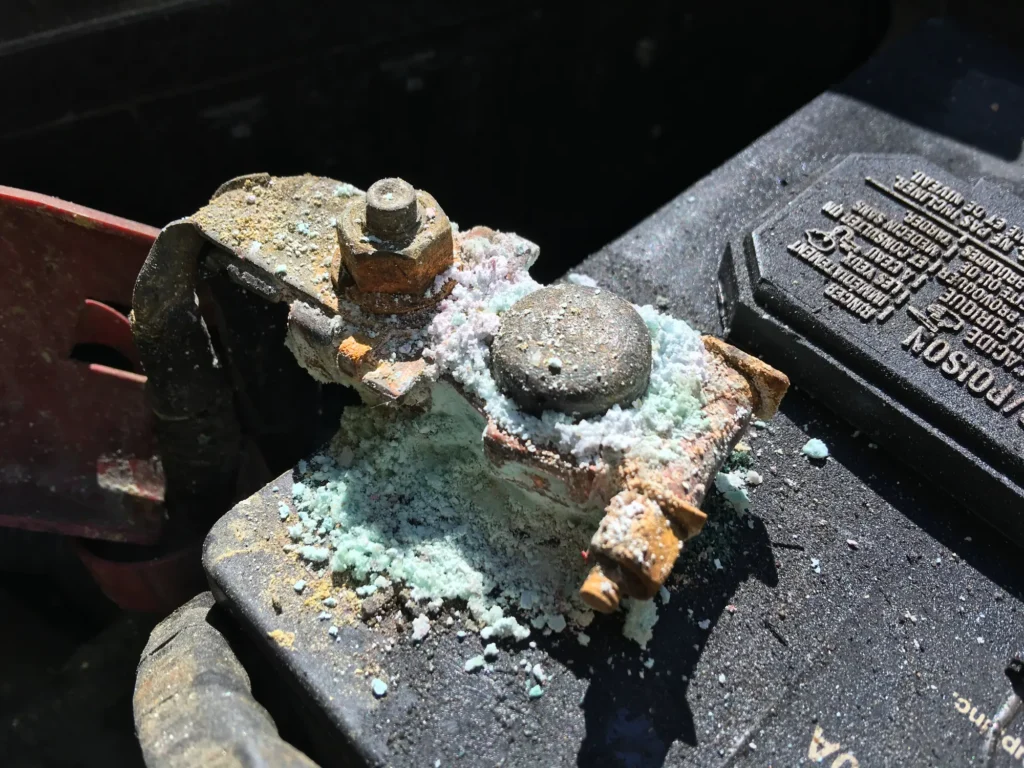
Bare copper in salt air turns green and black. That corrosion wicks along the strands, under the insulation, where you can’t see it. Resistance goes up, the connection heats, the voltage at the device drops.
Tin slows that down. Pacer says it uses finely stranded tinned copper “for superior corrosion protection.” Victron’s Wiring Unlimited is plain about it too: in marine or damp spots, use marine cable with tin-coated copper strands.
Why fine strands matter
A boat shakes. Engines vibrate, hulls pound, cables flex every time you open a hatch. Coarse strands fatigue and snap. Fine strands bend.
Victron says not to use cable with coarse strands, or cable that isn’t flexible, for battery wiring. Pacer’s 14 AWG duplex has 41 strands in each conductor. Its 18 AWG duplex has 16.
Why the temperature rating matters
Insulation has a heat limit. Pacer rates its boat cable at 105°C dry and 75°C wet. Blue Sea’s wire-size chart assumes 105°C insulation. If your wire is rated lower, that chart doesn’t fit it.
Engine rooms get hot. Wire that lives there should carry the rating the chart expects.
Duplex vs triplex: which one?
Short version: duplex is two wires in one jacket, triplex is three.
Duplex (2 conductors). Pacer’s “DC” duplex has one red and one black conductor in a white jacket. Use it for DC circuits: a nav light, a pump, a fan, a sounder. The positive and negative run together, so the round trip is one cable. Pacer extrudes the jacket so it fills the gaps between the conductors, which leaves no air space for condensation to collect.
Triplex (3 conductors). Pacer’s triplex has black, green and white conductors in a white jacket and is made for AC circuits on boats and RVs. White jackets are typical of 120V AC wiring in the US. Pacer also makes tan (230V Europe) and blue (240V US) versions.
AC wiring (shore power, inlets, outlets, the AC side of an inverter-charger) is a job for a licensed marine electrician. AC mistakes can shock someone in the water. The Pacer triplex boat cable 16/3, 100 ft is here for that work.
More on where each one goes: Duplex vs triplex marine wire: where each goes.
Which size marine wire do I need?
Size the wire for the voltage drop first. Then pick the fuse to protect that wire. That order matters.
- Find the amps. Look up what the device draws in its manual.
- Measure the round trip. Battery to device and back again. A pump 10 feet away is 20 feet of wire. Blue Sea and Victron both count it this way.
- Pick the drop. Blue Sea’s chart, which draws on ABYC E-11, uses 3% for critical circuits like panel main feeders, bilge blowers, electronics and navigation lights. It uses 10% for non-critical ones like general lighting and windlasses. Victron aims for under 2.5% on battery cables.
- Run the numbers. Put the amps, the length and the drop into the Wire gauge calculator. It gives you the smallest size that works. One size up is fine if you’re between sizes.
- Then fuse it. The fuse protects the wire, so pick it after the wire, with the Fuse size calculator.
Don’t overthink it. Amps, length, drop. The calculator does the rest.
How do I use marine wire right?
Most wiring faults show up at the ends, not mid-run. So spend your time there.
- Switch off and isolate. Disconnect the battery negative before you cut or strip anything that’s tied to the battery.
- Use tinned terminals. Pacer’s heat-shrink terminals are tinned copper with an adhesive lining. The tubing seals out water, condensation and salt spray and gives the wire strain relief. The Pacer heat-shrink ring terminal 8 AWG, 3/8 in stud fits 8 AWG on a 3/8 inch stud. The Pacer heat-shrink butt connector 12-10 AWG joins two 12-10 AWG wires.
- Crimp, then seal. A ratcheting crimper, then a heat gun. Step by step in Heat-shrink terminals and crimping battery cable.
- Keep the color code. Red for positive, black for negative on DC. That’s how the duplex comes.
- Support the run. Clip it so it doesn’t flex at the terminal.
Does tinned marine wire fit your job?
This applies if: – You’re wiring 12V DC circuits on a boat, or anywhere damp, salty or shaking. – You want wire with the UL 1426 boat cable listing and a 105°C rating.
This doesn’t apply if: – The job is AC: shore power, outlets, an inverter-charger’s AC side. Buy the right triplex, then hand the work to a licensed marine electrician. – You’re running big battery cables. Those come as single-conductor battery cable sized with the Wire gauge calculator, not duplex.
Products used in this guide
| Product | Why it’s here |
|---|---|
| Pacer duplex boat cable 14/2 red/black, 100 ft | Red and black 14 AWG, tinned, 105°C, for DC circuits. |
| Pacer duplex boat cable 18/2 red/black, 250 ft | Red and black 18 AWG for light loads and electronics. |
| Pacer triplex boat cable 16/3, 100 ft | Black, green, white for AC circuits. Installed by a licensed electrician. |
| Pacer heat-shrink ring terminal 8 AWG, 3/8 in stud | Tinned, adhesive-lined ring for 8 AWG. |
| Pacer heat-shrink butt connector 12-10 AWG | Sealed splice for 12-10 AWG. |
Prices show live from the store. See the full range in Marine wire and terminals. For where each wire runs in a lithium setup, see Boat lithium battery wiring diagram: 2 simple setups.
Quick answers
Is tinned marine wire worth it? On a boat, yes. Tin slows corrosion on every strand, and fine strands handle vibration. Pacer and Ancor both make their boat cable this way for those reasons.
Can I use automotive wire on a boat? It’s not the same product. Pacer lists its plain SAE wire as bare copper rated 60V DC. Its boat cable is tinned, finely stranded, rated 600V and listed to UL 1426 BC-5W2.
What does BC-5W2 mean? It’s the UL 1426 boat cable type printed on the jacket. Pacer prints it with the 105°C dry and 75°C wet rating.
Is marine wire the same gauge size as auto wire? Check the AWG printed on the jacket, and size by the calculator, not by the color or how thick it looks. Victron notes that thick insulation can make a cable look bigger than it is.
Duplex or triplex for a 12V light? Duplex. Red and black in one jacket. Triplex is for AC.
Related guides: Heat-shrink terminals and crimping battery cable
Sources
- Pacer 2025 product catalog: https://www.pacergroup.net/content/catalog.pdf
- Pacer Duplex Boat Cable spec sheet: https://www.pacergroup.net/content/Duplex-Boat-Cable-Spec-Sheet.pdf
- Ancor Catalog 2024, page 8: https://docs.navico.com/view/362211770/8/
- Victron Wiring Unlimited, DC wiring: https://www.victronenergy.com/media/pg/The_Wiring_Unlimited_book/en/dc-wiring.html
- Blue Sea Systems, Choosing the Correct Wire Size for a DC Circuit: https://www.bluesea.com/resources/1437
- Pacer 8 AWG ring terminals: https://www.pacergroup.net/ring-terminals-8-awg-wire/